My crew pours stamped concrete and we lay pavers, so I've got no horse in this race. When a homeowner asks me which one is better, my honest answer is that it depends on the yard, and I know that sounds like a dodge. So let me walk you through exactly what I look at when I'm standing in your backyard, because it's the same conversation I have at kitchen tables all over Anne Arundel County.
What You're Actually Choosing Between
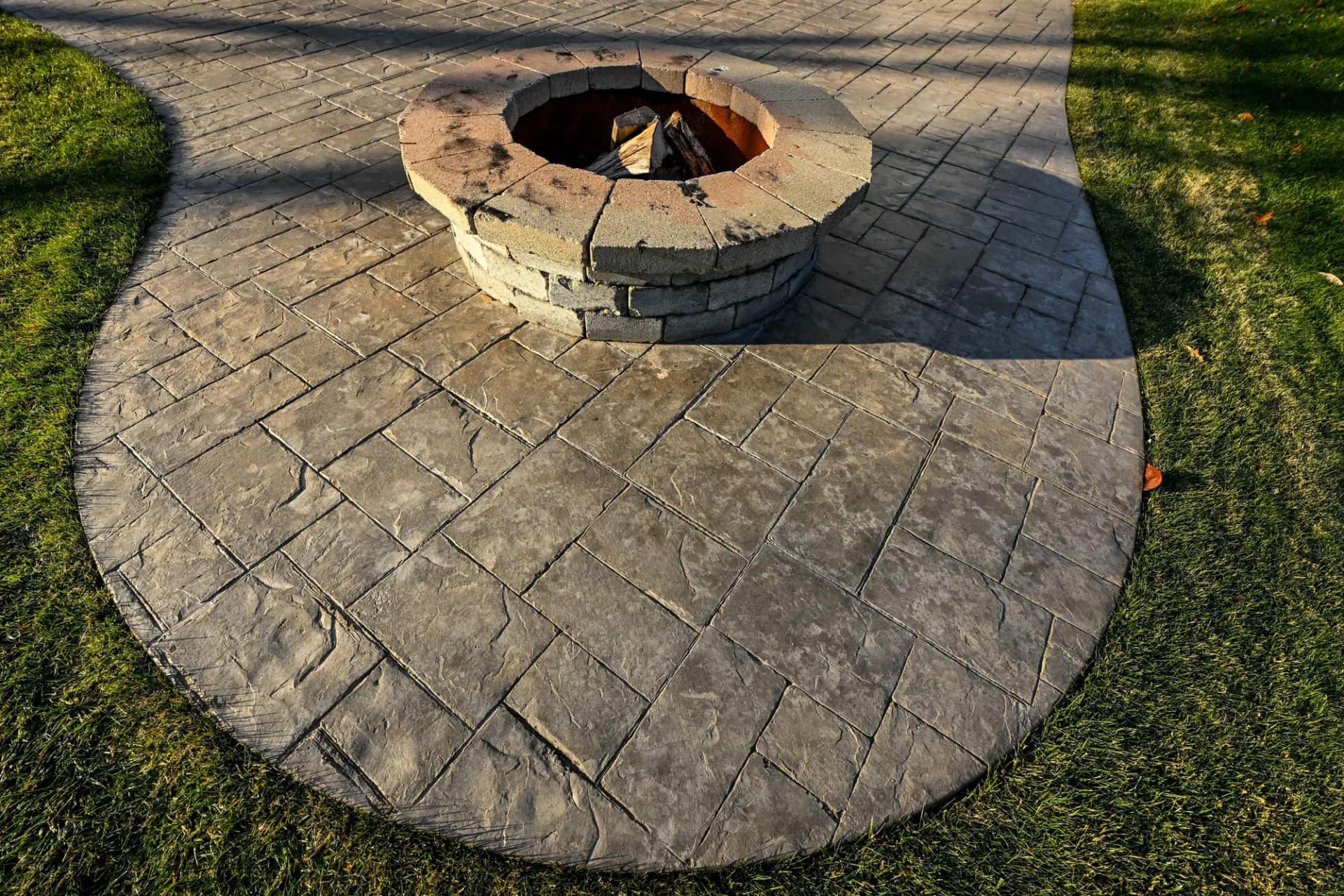
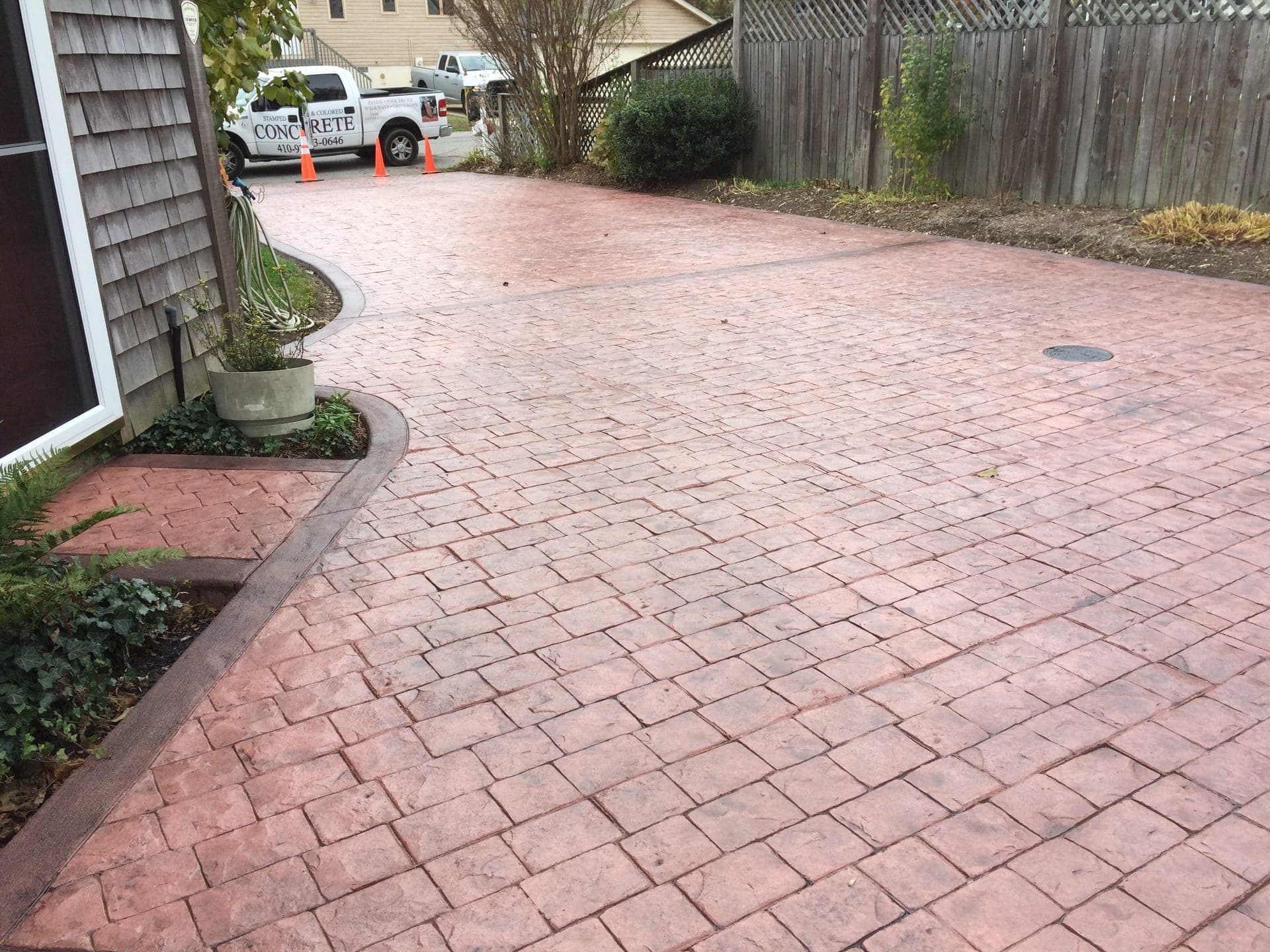
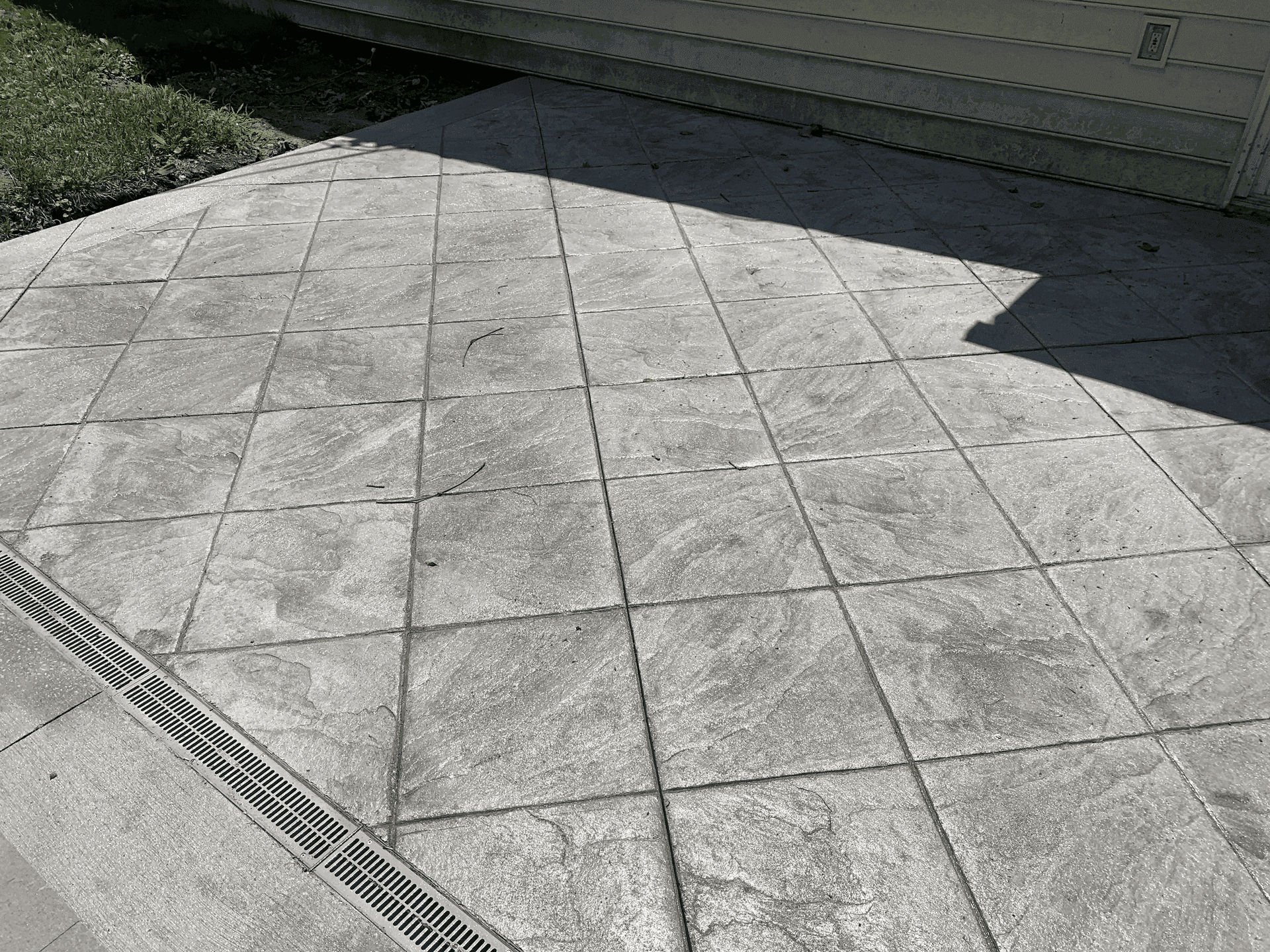
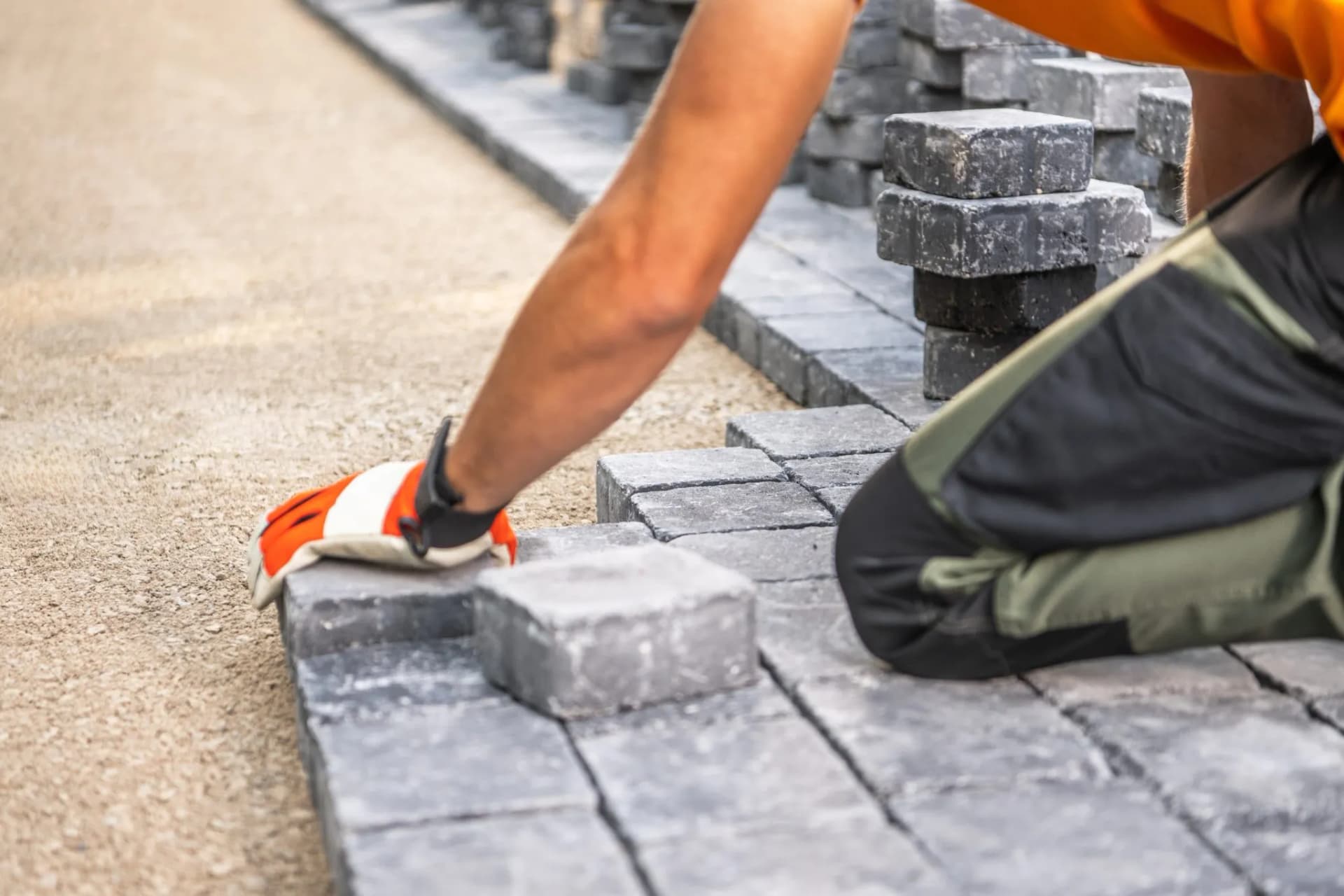
Stamped concrete is one continuous slab. We pour it and color it, then press textured mats into the wet surface so it looks like stone or brick. Pavers are individual pieces set on a bed of compacted stone and sand, locked together with joint sand.
One is a single piece. The other is hundreds of pieces. Almost every difference between them flows from that.
Cost
Around here, stamped concrete runs $12 to $22 per square foot installed depending on the detail. Pavers run $18 to $30 and up, with the fancy stuff going well past that. On a 400 square foot patio, that gap is real money, often $3,000 or more.
That's why stamped concrete is usually the answer when someone wants the high-end look on a working family's budget. It's about half the price of the natural stone it imitates.
How They Handle Maryland Weather
Our winters freeze and thaw over and over, and our clay soil holds water like a sponge. That combination is what kills patios here.
Paver units themselves are very dense and strong, and the joints between them let water drain through and give the surface a little flex. Stamped concrete leans on its base and its sealer to get through winter.
Here's the part most people miss. I've torn out failed paver patios and failed stamped patios both, and in almost every case the problem was under the surface, not the surface. A lazy base fails no matter what you put on top of it. I wrote about that in my piece on grading and drainage if you want to go deeper.
One honest warning: rock salt is rough on stamped concrete, especially young concrete. If you're the type to salt heavy all winter, tell me up front. It changes my recommendation.
When Something Goes Wrong
This is where pavers earn their price. If a section settles or a piece chips, we pull up that section and fix the base underneath. Then the same pavers go right back down. You'll never know we were there.
Stamped concrete is a slab, and a slab that cracks outside its joints stays cracked. We control that risk with the base and the joint layout, and I explain what's normal cracking and what isn't to every customer. But I won't pretend a bad crack in stamped work can be made invisible, because it can't.
Maintenance
Stamped concrete wants a fresh coat of sealer every 2 to 3 years to keep its color and keep water out. My stamped concrete maintenance guide covers the routine. Pavers skip the sealing but bring their own chores: joint sand washes out and needs topping up, weeds try the joints every summer, ants mine the sand from underneath, and the occasional unit goes wobbly and needs resetting.
Neither one is zero work. Anybody who tells you otherwise is selling something.
Side by Side
| Factor | Stamped Concrete | Pavers |
|---|---|---|
| Installed cost/sq ft | $12 to $22 | $18 to $30+ |
| Repairs | Difficult to hide | Lift and relay, invisible |
| Upkeep | Reseal every 2 to 3 years | Joint sand, weeds, resetting |
| Winter salt | Avoid it | Tolerates it better |
| Look | Continuous, seamless patterns | Individual stone character |
| Lifespan (built right) | 25+ years | 30+ years |
What I Recommend, Situation by Situation
A walkway near mature trees gets pavers, because roots move the ground and pavers can be relaid when they do. A big entertaining patio where budget matters usually gets stamped, because that's where the savings are biggest. Pool decks lean stamped with a texture for grip, and I covered that in my pool deck post. A buyer who wants zero resealing on their calendar gets pavers. And a waterfront property taking salt spray off the bay gets a longer conversation, because that environment is hard on everything.
The Real Answer
Come look at both in person. I keep addresses of past jobs all over the county, and there are plenty of both in our gallery. Stand on them in the afternoon sun and picture your own backyard. Whichever way you go, the thing that decides whether it lasts 30 years is the base nobody sees, so hire the person who talks more about the dirt than the pattern.
Every style we build, stamped and pavers both, lives on our patios and walkways page. And if you want to get the ball rolling tonight, the project builder takes about two minutes and tells me exactly what to bring to your estimate.
Bobby
Owner & Lead Contractor at Backyard Bobby's
Bobby is a licensed outdoor construction contractor (MHIC #05-163777) based in Millersville, Maryland. He and his crew have completed hundreds of projects across 19 Anne Arundel County communities — from gravel pads and patios to full deck builds and accessory dwelling units. When he's not on a job site, he writes about what Maryland homeowners should know before starting their next outdoor project.
Ready to Get Started on Your Patios & Walkways Project?
We provide free estimates for all patios & walkways projects in Anne Arundel County and surrounding areas.