Will a Concrete Pool Deck Get Too Hot? What I Tell Every Pool Owner
Come June, my phone fills up with pool deck calls, and every homeowner has the same two worries. Will it burn the kids' feet in July, and will somebody slip on it when it's wet. Those are exactly the right things to worry about, and both of them get decided by choices made before the pour. Here's how I handle each one.
The Heat Question Comes Down to Color
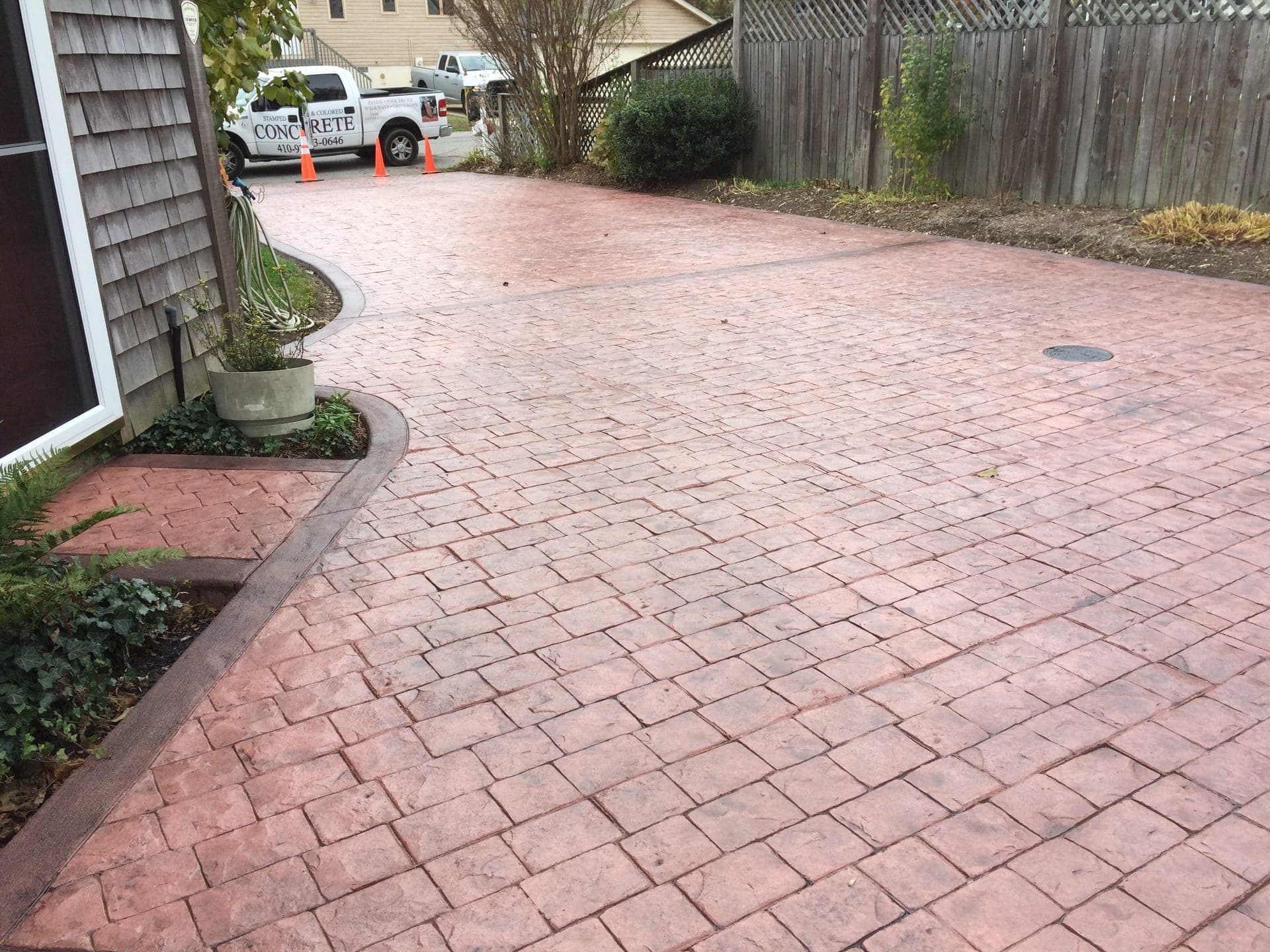
Any surface sitting in full sun on a 95 degree Maryland afternoon gets hot. What decides whether it's uncomfortable or dangerous is mostly color. Dark surfaces soak up the sun. A charcoal gray deck in July will have your family doing the barefoot dance to the water. Light colors reflect it, and concrete already runs cooler than brick or dark pavers to begin with. A light buff or sand tone stays walkable through most of the summer.
Here's my rule with customers, and I'm serious about it: pick your color outside, in the sun. I bring sample chips and we set them on your driveway in the afternoon heat. Touch them. The charcoal that looks sharp on a phone screen is the same one you'll be hopping across in August. Ten minutes of standing in a driveway has saved a lot of my customers from a decade of hot feet.
Slippery Is a Finish Problem, Not a Concrete Problem
People assume concrete gets slick around water. Plain concrete actually grips fine. What gets slick is a smooth-troweled surface with a glossy sealer over it, which is basically glass with a gray tint. Some crews finish pool decks that way because it's fast. I don't.
On my pool decks, traction gets built in. A broom finish gives a plain deck real grip. Stamped concrete textures like slate and seashell have natural grip built into the pattern. And on every pool deck we seal, I mix a fine grit additive into the sealer itself. You can't see it, but bare feet can feel it, and it keeps the sealer from turning the deck into a slide. That additive costs me a little extra per job. It's not optional on my pool decks.
Water Has to Go Somewhere
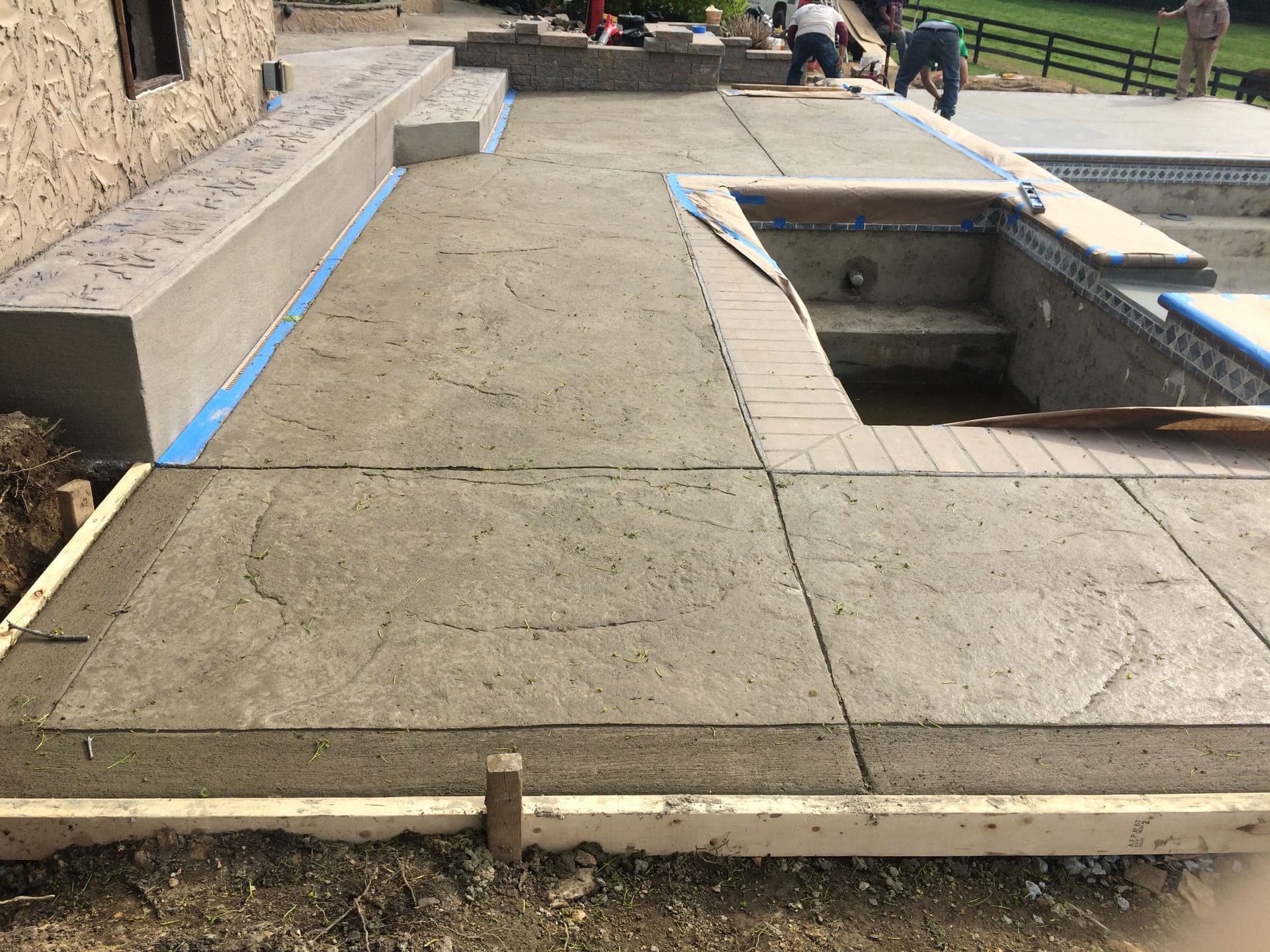
A pool deck lives wet. Splash-out, cannonballs, dripping kids, the occasional backwash. So the deck has to pitch away from the pool, about a quarter inch per foot, and that water needs somewhere to go once it leaves the slab. On yards that slope toward the pool we put in deck drains.
Standing water on a pool deck grows a film of algae that's slicker than any sealer, and in winter it becomes ice sitting on your concrete, working into every pore through our freeze and thaw cycles. Our county's clay soil makes drainage planning even more important, and I wrote about why the ground under your project decides everything.
Salt Pools, Chlorine, and Winter
If you've got a saltwater pool, hear me on this: that salt is just as hard on concrete as road salt. It's not a reason to skip the salt system, plenty of my customers love theirs. It's a reason to keep the deck rinsed and keep the sealer fresh. Sealer is what stands between pool chemistry and your concrete's surface, and around a pool I recommend resealing every 2 to 3 years with the grit mixed into every coat. My maintenance guide covers the routine.
And like any slab in Maryland, a pool deck will develop the odd hairline crack over the years. Most are nothing. Here's how to tell the harmless ones from the real ones.
What I'd Put Around My Own Pool
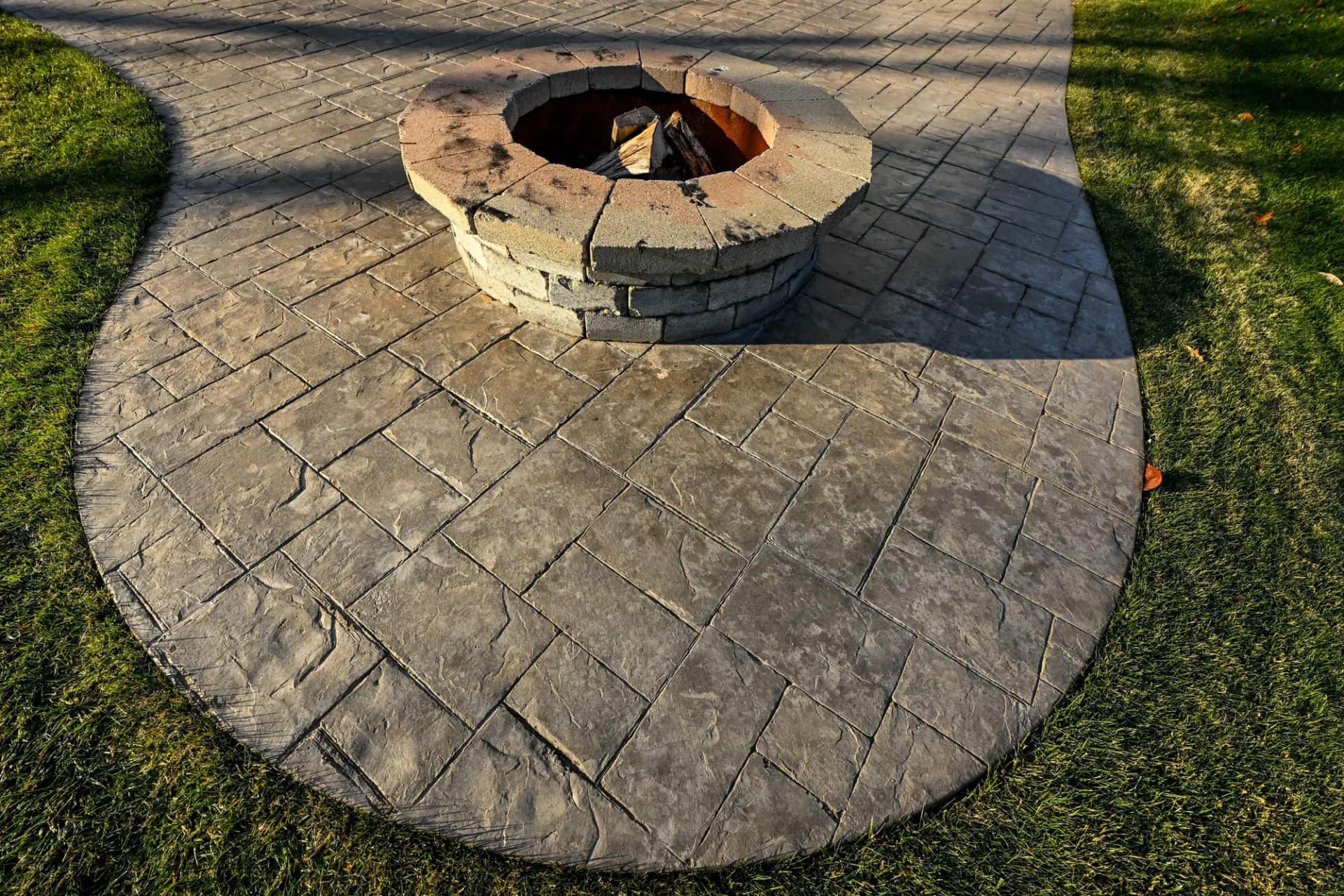
A light-colored stamped finish with real texture underfoot, and a border in a second tone if you want it dressed up. Seashell and slate patterns are the favorites on the pool decks we've done, and they look right at home in a county with this much shoreline. If you already have a deck that's too hot or too slick, don't assume it's a tear-out. Sometimes a fresh textured sealer coat fixes it for a fraction of the cost, and I'd rather tell you that than sell you a new deck you don't need.
Bring Me Your Questions
A pool deck is where your family lives all summer. Mine included. If you're planning one, or fighting with the one you've got, come get a free estimate and I'll walk the yard with you, sample chips in hand. You can also start with the project builder. It asks the right questions and takes about two minutes.
Bobby
Owner & Lead Contractor at Backyard Bobby's
Bobby is a licensed outdoor construction contractor (MHIC #05-163777) based in Millersville, Maryland. He and his crew have completed hundreds of projects across 19 Anne Arundel County communities — from gravel pads and patios to full deck builds and accessory dwelling units. When he's not on a job site, he writes about what Maryland homeowners should know before starting their next outdoor project.
Ready to Get Started on Your Patios & Walkways Project?
We provide free estimates for all patios & walkways projects in Anne Arundel County and surrounding areas.