Does a Shed Need a Foundation? What I Tell Homeowners Around Anne Arundel County
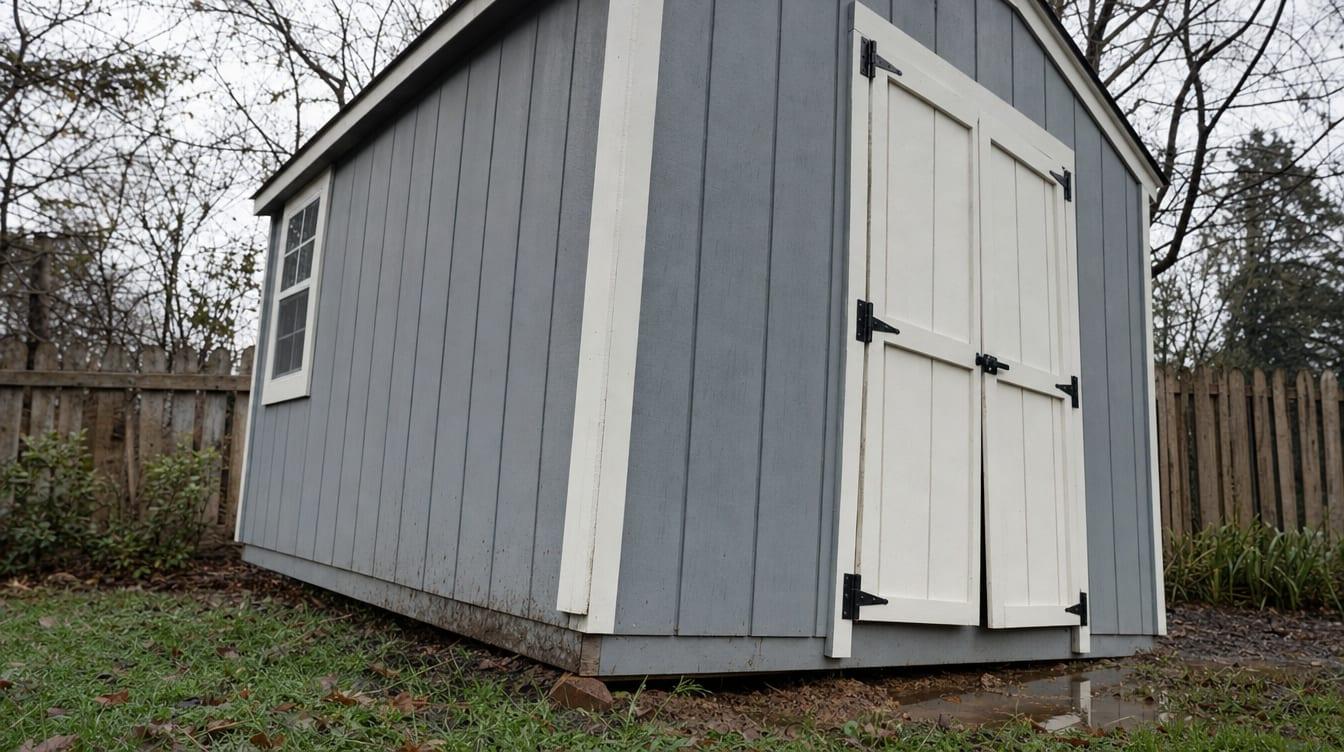
The shed's ordered, the delivery guy says he can drop it "right there on the grass," and now you're wondering if you can skip the foundation and keep the money. I get asked this a lot, usually by someone standing in the exact spot where the shed is about to go.
Short answer: yes, your shed needs a foundation. It doesn't have to be a big concrete job. For most backyard sheds a good gravel pad does the work. What it can't be is bare dirt, a patch of lawn, or four cinder blocks you leveled with a shovel.
What Happens When a Shed Sits on the Ground
Sheds that go straight on the grass tend to go bad in the same order.
First, the water. Grass holds moisture, and the ground under a shed never really dries out because the sun can't get to it. The floor framing sits in that damp all day, every day. Wood that stays wet rots, even pressure-treated wood takes a beating, and you get mold and mildew inside on whatever you're storing.
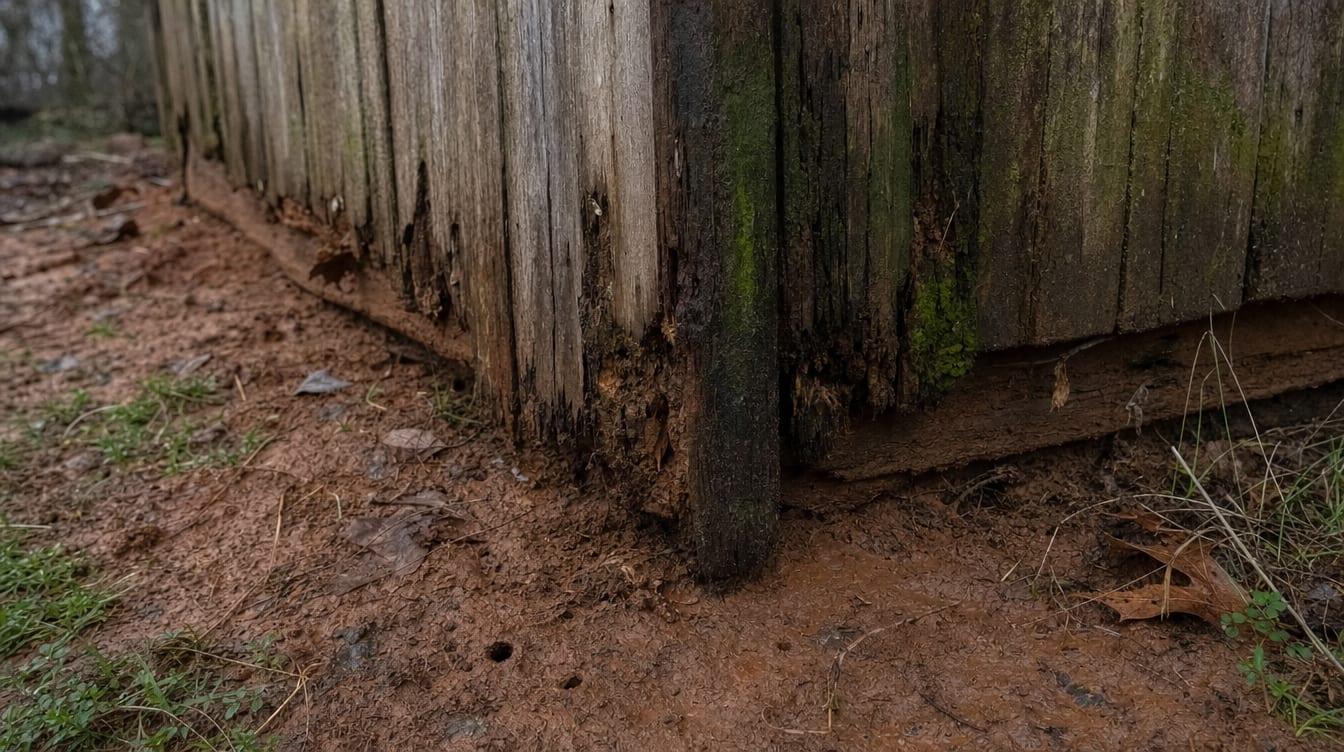
Then the settling. A shed with a lawn tractor, a workbench and a few bags of mulch in it is heavy, and the ground underneath isn't even. One corner sinks a little faster than the others. You won't see it for a while. Then one day the doors drag, the latch doesn't line up, and a window sticks.
By the time you notice, the fix is usually lifting the whole shed. That's a lot harder than building the base right the first time.
Around Here, the Dirt Makes It Worse
Most of Anne Arundel County sits on clay. Clay holds water instead of letting it drain, so after a good storm the ground under a shed can stay soggy for days. When it dries out it shrinks, and when it gets wet again it swells. That movement is hard on anything sitting on top of it.
If your shed spot is in a low part of the yard, or water runs toward it when it rains, it's even more important. A foundation gets the shed up out of the wet and gives the water somewhere to go besides the floor.
"The Shed Company Said It Could Go on Blocks"
Some sheds come with skids, which are treated timbers running along the bottom. Some people set those skids on concrete blocks or patio pavers and call it a foundation. On a small, light shed on flat, dry ground, that can hold up for a while.
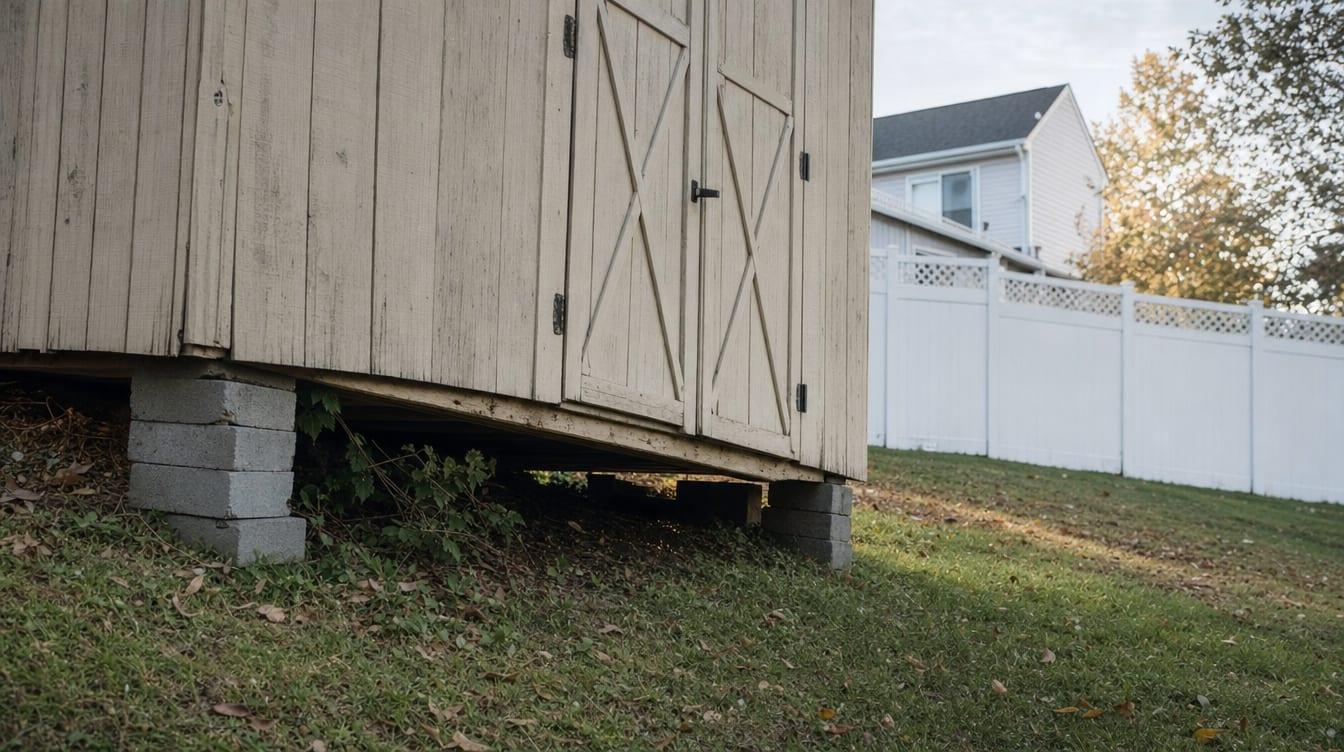
The trouble is that blocks just sit on top of the dirt. They sink on their own schedule, and on a slope you end up stacking them three high on one side, which is wobbly. Weeds and critters move into the open space underneath, and nothing about it handles water.
Before you decide, read your shed company's paperwork. A lot of shed builders spell out what they want under their buildings, and some tie the warranty to it. If yours does, that's where we start.
What Counts as a Real Foundation
For most homeowners it comes down to two choices.
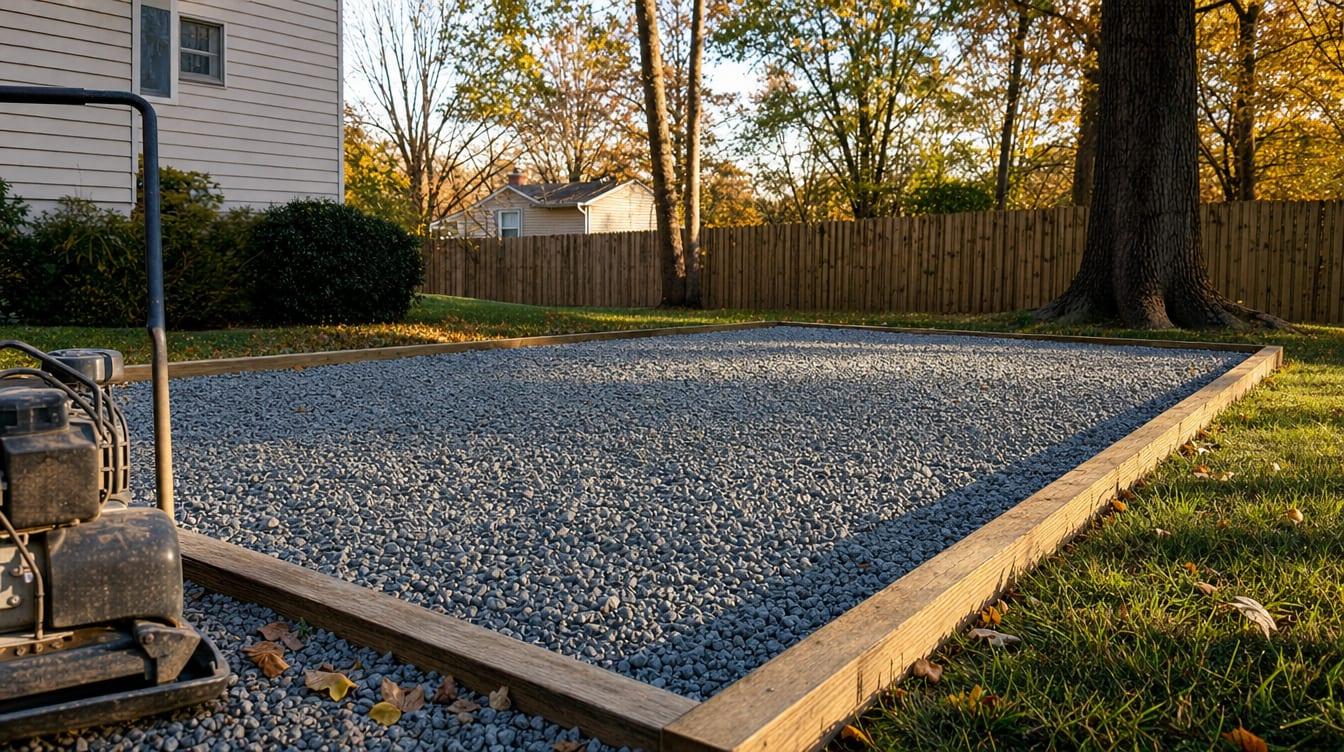
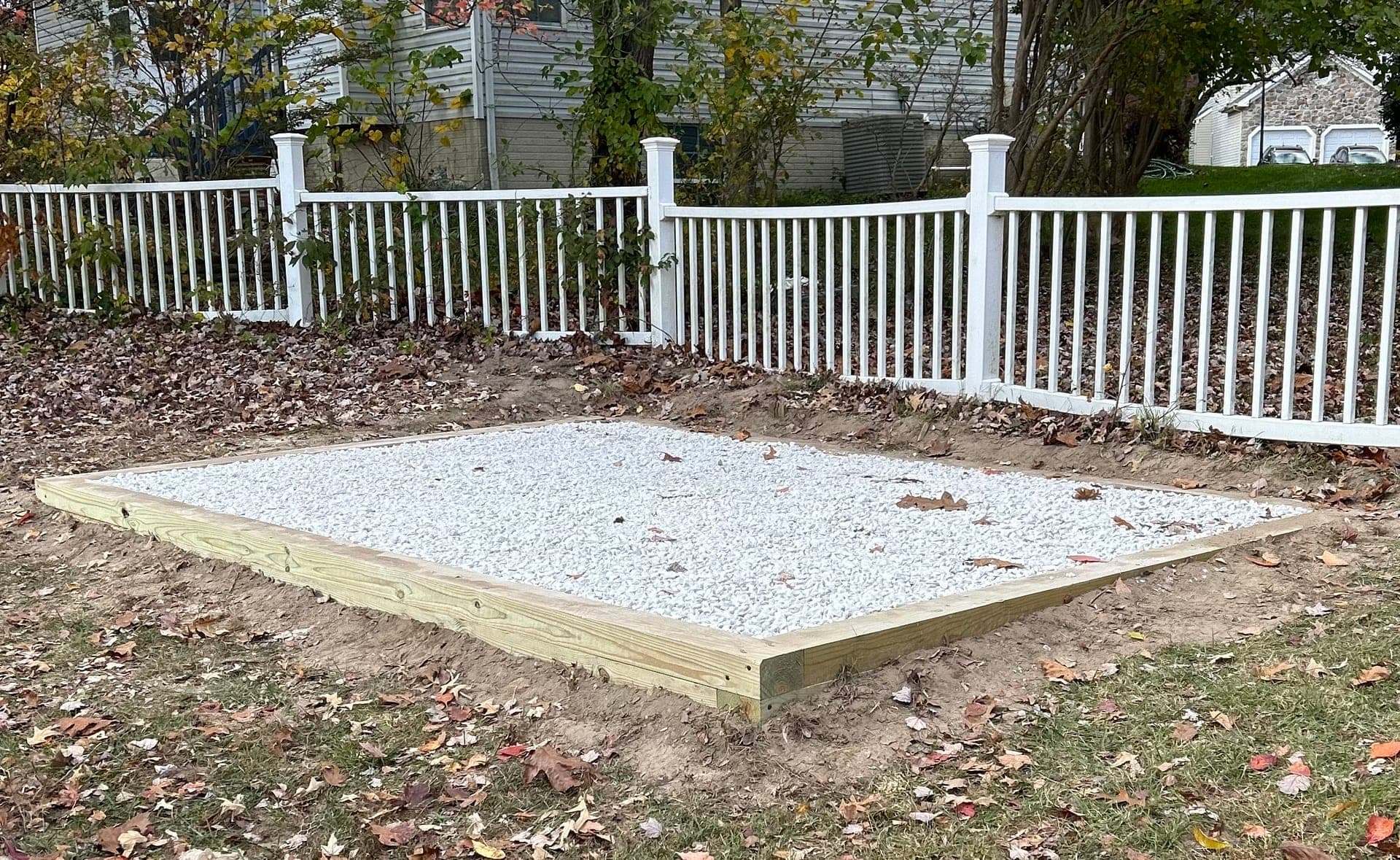
- A gravel pad. Crushed stone, dug in, framed and compacted. It drains well, which matters a lot in clay, it goes in quickly, and your shed can sit on it the day we finish. For most standard backyard sheds, this is what I'd recommend.
- A concrete slab. Better for heavy buildings, workshops, garage-style sheds, or anywhere you want a smooth floor you can roll equipment across. It costs more, it needs time to cure, and the drainage around it has to be planned.
I laid out gravel pads and concrete slabs side by side if you're stuck between the two. And if you're going the gravel route, I wrote up what kind of gravel goes under a shed, because the cheap round stuff at the stone yard is the wrong pick.
How We Build a Gravel Pad
A pad holds up because of how it's built, so here's how we do ours:
- Dig out the soft stuff. We excavate, typically 6 to 8 inches, and strip out the topsoil, grass and roots. Anything that rots will settle.
- Grade the bottom so water moves away from the shed instead of pooling under it.
- Lay geotextile fabric so the clay doesn't push up into the stone and the stone doesn't sink down into the clay.
- Frame it so the edges don't spread out under the weight.
- Add the stone in layers and compact each one. Most of our pads end up 4 to 6 inches of compacted crushed stone, and we go up to 8 for heavier buildings or soft ground.
- Laser level it, because if it's only close to level, you'll see it later in your shed doors.
We also build the pad bigger than the shed, about a foot past the walls on every side. That extra stone catches rain coming off the roof so it doesn't dig a trench along the base. You also get a dry spot to step onto coming out the door.
Check the Rules Before Anything Goes Down
Depending on the size of the shed and where it sits on your lot, you may need a permit from Anne Arundel County. The county's Inspections and Permits office is the place to ask, and it's worth calling before the shed shows up, not after.
There are a few other things to check too:
- Your HOA. Plenty of neighborhoods in Crofton, Severna Park, Odenton and other parts of the county have architectural rules for sheds and outbuildings, and they usually want to sign off first.
- Setbacks. There are rules on how close a structure can sit to your property line.
- Well and septic. If you're on well and septic, which a lot of homes in Millersville and Gambrills are, you have to keep the shed clear of them.
- The water. If you're close to tidal water, you could be in the Critical Area, which adds an environmental review.
When I come out for an estimate, I'll walk the spot with you and talk through where the shed can actually go. The final word on permits comes from the county and your HOA.
My Two Cents
Ask ten people whether a shed needs a foundation and somebody will tell you their uncle's shed sat on the grass for twenty years. Maybe it did. Most don't. Paying for a shed and then setting it on wet clay costs you more in the end, because one day you're paying to jack it up, replace the rotted floor, and build the base anyway.
A well-built gravel pad isn't fancy. It's dug, framed, compacted and level, and it keeps your shed dry and square for a long time.
We build gravel pads, shed foundations and concrete slabs for homeowners in Millersville, Pasadena, Glen Burnie, Crofton and around Anne Arundel County, and I'm licensed (MHIC #05-163777). If you've got a shed on the way, see how we build shed foundations or get a free estimate. I'll come look at your spot and tell you exactly what I'd put under it.
Bobby
Owner & Lead Contractor at Backyard Bobby's
Bobby is a licensed outdoor construction contractor (MHIC #05-163777) based in Millersville, Maryland. He and his crew have completed hundreds of projects across 19 Anne Arundel County communities — from gravel pads and patios to full deck builds and accessory dwelling units. When he's not on a job site, he writes about what Maryland homeowners should know before starting their next outdoor project.
Ready to Get Started on Your Gravel Pads & Concrete Foundations Project?
We provide free estimates for all gravel pads & concrete foundations projects in Anne Arundel County and surrounding areas.